Best Bases for Amalfi Coast Without a Car
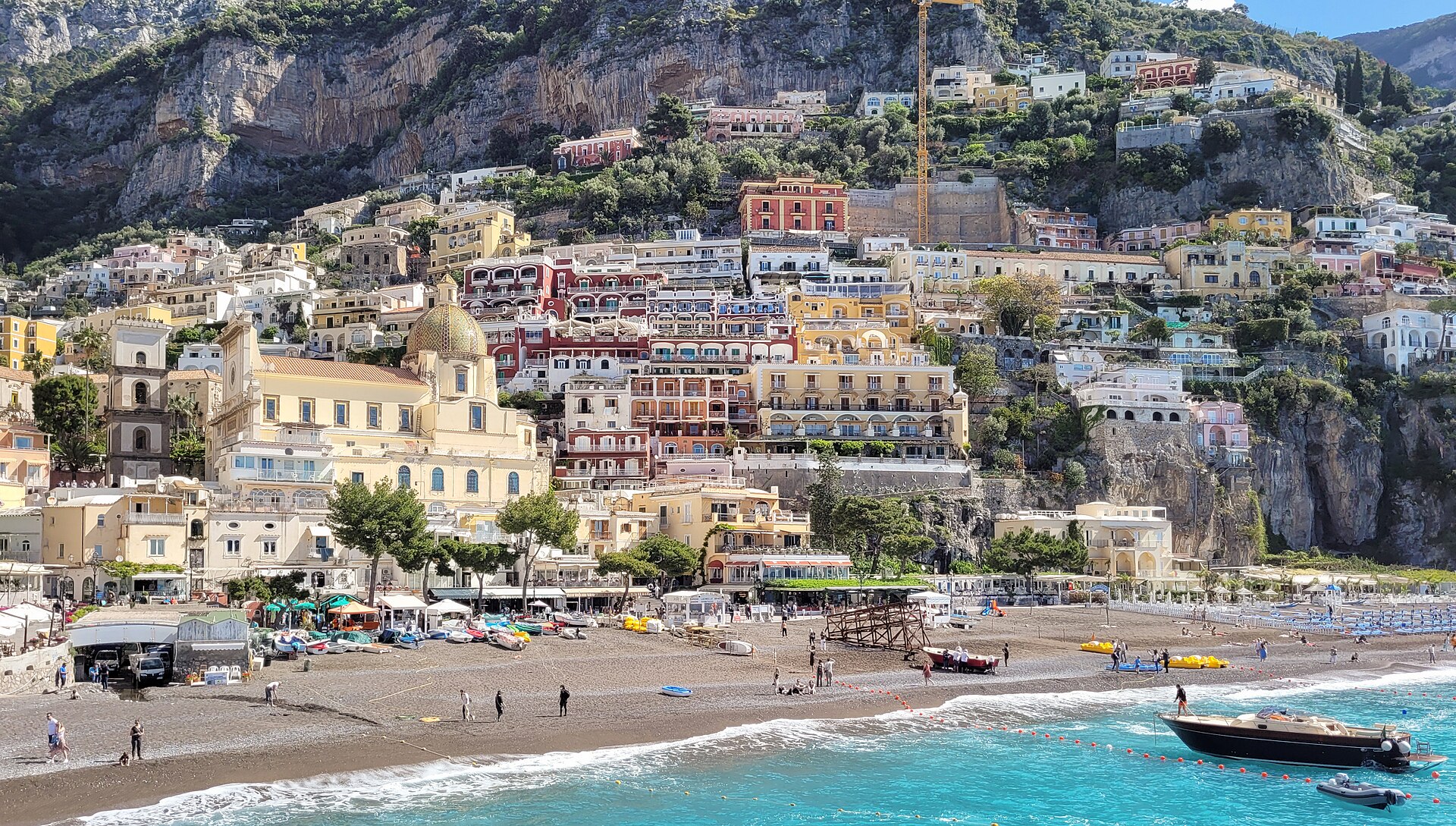
The first time I did the Amalfi Coast without a car, I picked the prettiest town on Instagram and spent half the trip hauling a suitcase up stone steps and missing buses that were already full when they reached me. The second time I picked by transport, not by view, and the whole thing got easy.
If you’re deciding where to stay Amalfi Coast without a car, base in Sorrento (best ferry and train hub, easy luggage) or Salerno (cheapest, fast trains from Rome, year-round ferries) for stress-free logistics, or Positano / Amalfi town if you want to wake up on the coast and accept the stairs and crowds. This is for travelers arriving by train or plane with no rental.
That’s the short version. The long version is what actually makes a carless trip pleasant instead of a daily fight, so let me walk you through each town, the ferries and buses that connect them, and which base fits which kind of trip.
The quick comparison: Sorrento, Salerno, Positano, Amalfi, Maiori
Before I get into the weeds, here’s how the realistic car-free bases stack up. I’m comparing the five towns most people actually choose. Praiano and Ravello get their own note further down, because they’re wonderful but they ask more of you without wheels.
| Base | Car-free access | Vibe | Cost | Best for |
|---|---|---|---|---|
| Sorrento | Excellent — train from Naples, ferries to everywhere, walkable, gentle gradients | Polished resort town, big but easy | €€–€€€ | First-timers, anyone with big luggage, Capri and Pompeii day trips |
| Salerno | Excellent — fast trains from Rome/Naples, year-round ferries, flat city | Real working Italian city, underrated | €–€€ | Budget travelers, arrivals from Rome, shoulder/winter trips |
| Positano | Good by ferry and bus, but brutal stairs from port and road to town | The postcard, dramatic and crowded | €€€–€€€€ | Splurge stays, photographers, light packers who want the view |
| Amalfi town | Very good — central bus and ferry hub, mostly flat center | Historic, lively, central to everything | €€–€€€ | People who want to be on the coast but still mobile |
| Maiori / Minori | Good — flat seafronts, ferries in season, on the bus line | Low-key, local, beach-town calm | €–€€ | Slower trips, families, better value near Amalfi |
Read that table as a hierarchy of effort. The towns at the top take care of you. The ones in the middle reward you with scenery and charge you in staircases. None of them are wrong — they’re just different trips.
Why your base decides where to stay Amalfi Coast without a car
On a coast where you can drive, the town you sleep in barely matters. You point the car wherever and go. Without a car, your base is the single biggest decision of the trip, because everything radiates out from it on two systems only: the SITA Sud buses that grind along the cliff road, and the ferries that run roughly April through October.
Both have hard limits. The buses get genuinely, miserably full in summer. The ferries are fast and lovely and don’t run at all in winter. So your base isn’t just “where’s nice.” It’s “where can I get out of every morning and back into every night without it ruining my mood.” That’s the lens for the whole Sorrento Salerno Positano base question, and it’s the lens I’ll keep coming back to.
If you want the wider picture of the region first, I’d start with my Amalfi Coast and Campania overview and the broader where to stay in Italy pillar, then come back here to lock in the town.
Sorrento: the easiest car-free base, even though it’s not on the Amalfi Coast
Let me get the technicality out of the way. Sorrento is not on the Amalfi Coast. It sits on the other side of the peninsula, facing the Bay of Naples. Coast purists will tell you this like it’s a dealbreaker. It isn’t, and here’s why I send most first-timers here anyway.
Sorrento has a train station. That one fact changes everything. You arrive directly from Naples on the Circumvesuviana line (or the more comfortable Campania Express seasonal service), roll your suitcase a few flat minutes to your hotel along Corso Italia, and you’re done — no transfer, no bus, no stairs. Try that in Positano and you’ll understand the difference in your knees.
From Sorrento you can reach almost the whole region by ferry: Capri, Positano, Amalfi, and onward. The buses to Positano and Amalfi start their run here, which matters more than it sounds, because a bus you board at the start of the line is a bus you get a seat on. By the time that same bus reaches Positano in August, it’s often already full and sailing past people.
What you trade for all this ease: Sorrento itself is a polished, slightly touristy resort town rather than a dramatic cliff village. The “beaches” are mostly platforms and lidos. And you’re a ferry or bus ride away from the famous coast scenery every day, which adds travel time. For a lot of people that’s a fine trade — you sleep somewhere easy and visit the dramatic places. If that’s your style, my full Sorrento travel guide goes deeper on neighborhoods and where to sleep.
Base in Sorrento if: it’s your first time, you’ve got real luggage, you care about Capri and Pompeii as much as the coast, or you just want the carless logistics to disappear.
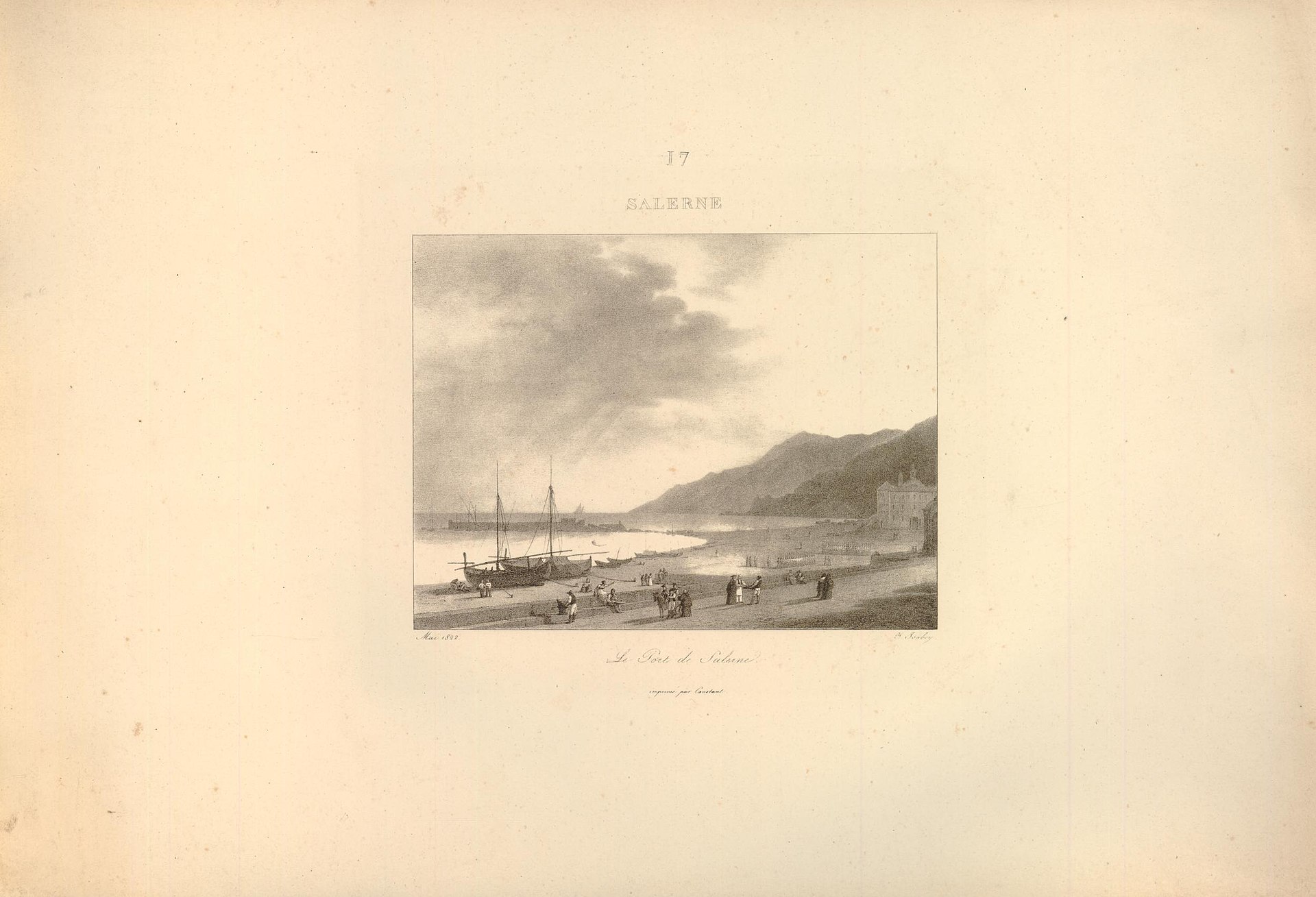
Printed by: Villain (CC0) via Wikimedia Commons
Salerno: the budget gateway that solves the Rome problem
Salerno is the base nobody photographs and the one I keep recommending. It’s a real city — a university, a working port, residents going about their lives — at the eastern end of the coast. It is not cute in the Positano sense. It is, however, the smartest car-free choice for two specific groups.
First, anyone coming from Rome. Salerno is on the main fast-train line, so you can get from Rome to Salerno by high-speed train in a couple of hours and step off into a flat city you can walk. Compare that to the slog of getting to Positano from Rome and it’s not close. I cover the full route options in my Rome to Amalfi Coast guide.
Second, anyone traveling in shoulder season or winter. Salerno’s ferries run more of the year than anywhere else on the coast, and the train doesn’t care what month it is. When the seasonal ferries shut down and the buses thin out, Salerno stays connected. It’s the one base that doesn’t strand you in November.
On top of that, it’s the cheapest of the realistic bases by a wide margin, the seafront promenade is genuinely pleasant for an evening walk, and the food is excellent and un-inflated. Ferries from here reach Amalfi, Positano and Capri in season via operators like Travelmar and Alicost. The catch is honest: you’re at the far end, so day-tripping to Positano is a longer haul than from Sorrento or Amalfi, and the town lacks the immediate wow factor.
Base in Salerno if: you’re price-conscious, arriving from Rome, traveling outside high summer, or you’d rather sleep in a real city and commute to the pretty bits.
Positano: the dream base, if your legs and wallet agree
I love Positano. I also think a lot of people book it without understanding what they’re signing up for, so let me be the friend who tells you straight.
Positano is built into a near-vertical cliff. There is no flat. The ferry drops you at the bottom; many hotels are partway up; the bus stops are on the main road at the top. Getting between any of these means stairs — hundreds of them — and there’s no avoiding it with a suitcase unless your hotel offers a porter service (some do; ask before you book). I’ve watched couples arrive thrilled and reach their room sweaty and quietly furious. Pack light. I mean it.
Now the good news, because it’s real: waking up in Positano is genuinely special, the ferry connections are excellent in season (it’s a hub for Positano Jet, NLG, Travelmar and Alicost), and being based on the coast means you skip the daily commute into the scenery — you’re already in it. For photographers and honeymooners who travel light and don’t mind the climb, nowhere beats it.
The other catch is money. Positano is the most expensive base on this list, often by a lot. You’re paying a premium for the view and the address. If that fits the trip you want, wonderful. If you flinch at the table above, base elsewhere and visit Positano by ferry for the day — which, honestly, is how I’d tell most people to “do” Positano anyway.
Base in Positano if: you’re packing light, the budget is there, you want the postcard from your own terrace, and stairs don’t scare you.
Amalfi town: the central hub that keeps you mobile
If you want to actually sleep on the Amalfi Coast but not punish yourself, Amalfi town is the answer I give most often. It sits in the middle of the coastline and functions as the region’s transport heart — buses and ferries converge here, which makes it the easiest coast town to get out of in every direction.
The historic center around the cathedral is, crucially, mostly flat. After Positano, walking around Amalfi feels like a holiday in itself. You can roll luggage from the ferry port to many hotels without a staircase ordeal, the bus line runs straight through, and ferries connect you to Positano, Salerno, Capri and the smaller towns in season.
From Amalfi you’re also perfectly placed for Ravello, the serene garden town high on the hill above. Ravello is one of the loveliest spots in all of Italy, but getting up there without a car means a winding local bus, which is exactly why I suggest sleeping in Amalfi and day-tripping up rather than basing in Ravello itself. Same logic for the little neighbor town of Atrani, a short walk away.
The honest trade: Amalfi gets very busy midday when the tour boats and buses unload, and prices sit in the middle-to-upper range. But for “on the coast, still mobile, no stair nightmare,” it’s the sweet spot. For what to actually do once you’re based here, my Amalfi Coast itinerary lays out the days.
Base in Amalfi if: you want to wake up on the coast, stay central, keep your luggage life easy, and reach Ravello and the small towns without much fuss.
Maiori and Minori: the value pick near Amalfi
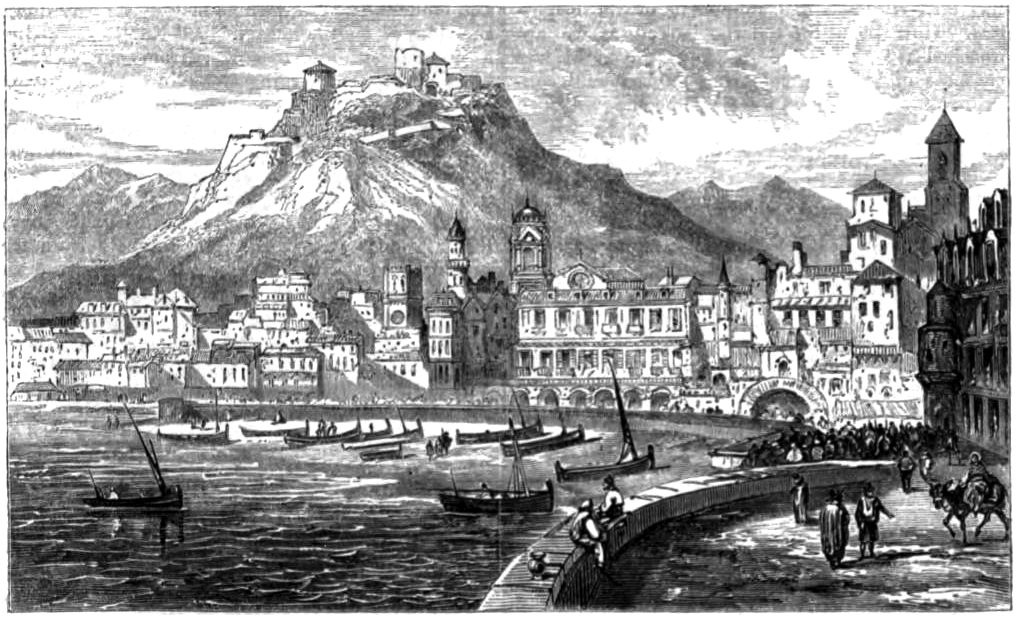
These two adjoining towns sit just east of Amalfi and they’re the quiet bargain of the coast. Maiori has the longest beach on the Amalfi Coast and — rare for this region — a flat, walkable seafront. Minori next door is smaller and sweeter, famous locally for its pastry. Both are on the SITA bus line and both get ferries in season.
I point people here when they want a calmer, cheaper, more local stay and don’t mind being slightly off the marquee names. You get easy flat walking, better-value rooms, real beach time, and quick bus or ferry hops to Amalfi and beyond. The trade is simply that you’re not in Positano or Amalfi proper, so you’re commuting a little to the headline sights. For families and slower trips, that’s often a feature, not a bug.
Base in Maiori or Minori if: you want value, beach access, flat ground underfoot, and a quieter base within easy reach of Amalfi.
A quick word on Praiano and Ravello
Both deserve a mention so you can rule them in or out honestly.
Praiano sits between Positano and Amalfi and is calmer and a bit cheaper than Positano with similar drama. The catch for car-free travelers is that it’s strung along the cliff road, so reaching your specific hotel usually involves steps down (and back up) from the bus stop, and ferry service is more limited than at the bigger hubs. Doable, lovely even, but plan the stairs.
Ravello is sublime and high above the coast. There’s no ferry — you reach it by a connecting bus up from Amalfi. As a place to visit it’s unmissable. As a base without a car, it’s isolating, because every trip out starts with that hill bus. I’d day-trip up from Amalfi rather than sleep there, unless a quiet hilltop retreat is the entire point of your trip.
Getting around without a car: ferries vs buses vs trains
This is the part that makes or breaks the trip, so here’s how the three systems actually behave, with the honest version of each. For the region-wide picture, my Italy ferries and Italy transportation guides go broader, but this is the coast-specific reality.
Ferries: your best friend, roughly April to October
When the ferries run, take them. They’re faster than the bus, they don’t get stuck in road traffic, and the views are the views. Multiple operators work the coast — Travelmar, Alicost, NLG and Positano Jet are the names you’ll see most — linking Sorrento, Positano, Amalfi, Salerno and Capri, with smaller stops like Maiori and Minori in high season.
The two things to burn into memory: ferries are seasonal, running roughly late March or April through October, with the fullest service in summer; and timetables and fares shift year to year and with the weather (rough seas cancel sailings). I won’t quote exact prices or times because they change — check the operators’ own sites (travelmar.it and the others) close to your trip, around 2026, for the current schedule. In winter, assume the pretty ferry network is mostly gone and you’re on buses and trains.
Buses: the SITA Sud reality check
The SITA Sud buses run the cliff road (the SS163) connecting Sorrento, Positano, Praiano, Amalfi, Maiori, Minori and on toward Salerno. They go where ferries don’t and they run year-round, which makes them essential. They are also, in peak season, the single most frustrating part of a car-free Amalfi trip, and I’d rather you hear it from me now.
In July and August the demand wildly outstrips the seats. Buses leave Amalfi already full and roll past people waiting in Positano with no room to board. Travelers regularly wait through multiple buses. It’s standing-room, hot, and on those hairpins, not for the queasy. As of 2026, expect this to still be true in high summer — it’s a structural mismatch, not a one-off bad day.
How I cope with it: ride early (the first buses of the morning are emptiest), board at the start of a line when you can (Sorrento or Amalfi, not an intermediate stop), and use ferries instead whenever the route and season allow. Buy tickets before boarding from a tabaccaio or newsstand — they’re not sold onboard — and if you’ll bus around a lot in a day, the unlimited 24-hour COSTIERASITA ticket (around €10, as of 2026) usually pays for itself. There’s also a seasonal coast bus service in summer; check the current SITA Sud and EAV sites for what’s running.
Trains: the carless gateways
You will almost certainly arrive by train, and there are two doors onto this coast. Sorrento is the end of the Circumvesuviana line from Naples — frequent (roughly every half hour), cheap, and stopping at Pompeii and Herculaneum on the way, but often crowded, un-air-conditioned, and with stairs at stations and nowhere proper for big luggage. The Campania Express is a pricier tourist version of the same line with guaranteed seats and luggage space, well worth it with suitcases. Salerno is on the main national rail network, so fast trains from Rome and Naples reach it directly.
That’s the whole car-free skeleton: train in to Sorrento or Salerno, then ferry or bus along the coast. Everywhere else hangs off those two stations. It’s also why the Sorrento Salerno Positano base decision really comes down to “do I want a train-station base (Sorrento, Salerno) or a coast base I reach by transfer (Positano, Amalfi, Maiori).”
How to day-trip from your base without a car
Here’s how the day trips actually work once you’re set up, so you can picture the trip:
- Positano and Amalfi: Easiest by ferry in season — fast and scenic from Sorrento, Salerno or each other. Off-season or when seas are rough, it’s the SITA bus. Going early beats both the crowds and the full buses.
- Ravello: Ferry or bus to Amalfi, then the connecting hill bus up. There’s no ferry to Ravello. Half a day minimum; the gardens deserve it.
- Capri: A ferry trip, and Sorrento is the most convenient launch pad by far, with frequent boats. Salerno and the coast towns also have seasonal sailings. My Capri day trip guide covers timing and what to skip.
- Pompeii and Herculaneum: Trivial from Sorrento — they’re stops on the Circumvesuviana toward Naples. Awkward from the coast towns, which is another quiet point in Sorrento’s favor.
- Beaches: Reachable by ferry and bus along the coast, but expect stairs down to most of them. I’ve rounded up the best in my Amalfi Coast beaches guide.
If you’d rather see a complete town-by-town breakdown of the coast beyond the car-free angle, my where to stay on the Amalfi Coast guide and the dedicated Amalfi Coast without a car logistics piece cover the rest.
So which base should you actually pick?
Let me make it concrete, because that’s what I’d want.
- Easiest possible trip, big luggage, first time: Sorrento. Train in, everything by ferry, no stairs to your room.
- Cheapest, or coming from Rome, or traveling off-season: Salerno. Fast trains, year-round ferries, real-city value.
- You want to sleep on the coast and stay mobile: Amalfi town. Central, flat center, hub for everything.
- You want the postcard and you pack light with budget to match: Positano. Accept the stairs, get the view.
- Value, beaches, slower pace near Amalfi: Maiori or Minori.
A move I love for longer trips: split your nights. A couple in Sorrento for the easy arrival, Capri and Pompeii, then a few on the coast in Amalfi or Positano. You get the logistics and the romance, and you only do the annoying transfer once. If you’re weighing accommodation styles while you’re at it, my take on hotels vs Airbnb in Italy and the wider best cities to stay in Italy roundup may help you book smarter. And if Naples is part of your routing, the Naples travel guide sets that up.
Final thoughts
If I had to compress everything into one line: pick your base by how you’ll move, not by which photo you liked most. Sorrento and Salerno make a car-free trip effortless because they have train stations and the connections fan out from there. Amalfi town lets you sleep on the coast and still get around. Positano gives you the dream and charges you in stairs and euros. Decide which of those trips you actually want, book accordingly, and the Amalfi Coast without a car turns from a logistics puzzle into one of the best weeks you’ll have in Italy.
Questions travellers ask
What is the best town to stay in on the Amalfi Coast without a car?
For pure ease, Sorrento — it has a train station, gentle gradients, and ferries everywhere. For value and year-round connections, Salerno. If you want to actually sleep on the coast while staying mobile, Amalfi town is the sweet spot thanks to its central, mostly flat center and combined bus and ferry hub.
Do you really need a car for the Amalfi Coast?
No — and many regulars argue you’re better off without one. Parking is scarce and expensive, the cliff road is nerve-wracking, and the ferries and SITA buses reach all the main towns. A car only makes sense for remote agriturismi or total flexibility. For a town-hopping coastal trip, car-free is genuinely easier as of 2026.
Is it better to stay in Sorrento or Positano without a car?
Sorrento for ease, Positano for drama. Sorrento gives you a train station, flat walking, and the start of bus and ferry lines, so logistics disappear. Positano gives you the famous view but demands constant stairs and a bigger budget. Most first-timers should base in Sorrento and visit Positano by ferry for the day.
When do the Amalfi Coast ferries stop running?
Ferries run roughly from late March or April through October, with peak service in summer. Outside that window, most coastal ferry routes shut down and you’re reliant on SITA buses and trains. Rough seas can also cancel sailings even in season, so always check operators like Travelmar or Alicost close to your dates, around 2026.
How bad are the SITA buses in summer?
Honestly, rough at peak times. In July and August buses often leave Amalfi already full and pass waiting passengers in Positano, so you can wait through several. Ride early, board at the start of a line, buy tickets before boarding, and lean on ferries instead whenever the season allows. The unlimited COSTIERASITA day ticket helps if you’ll ride a lot.
Is Salerno a good base for the Amalfi Coast without a car?
Yes, and an underrated one. Salerno has fast trains from Rome and Naples, the longest ferry season on the coast, a flat walkable center, and noticeably lower prices. The trade is that it’s a real working city at the far end, so it lacks postcard charm and day trips to Positano take a bit longer. Great for budget and shoulder-season trips.
How do I get from the airport to the Amalfi Coast without a car?
Fly into Naples, then take the Circumvesuviana train (or seasonal Campania Express) to Sorrento, or a national train to Salerno. From either gateway, continue by ferry in season or SITA bus year-round to your coast town. There’s also a direct seasonal bus from Naples toward Amalfi, then a final ferry or bus hop to your town.
Can you get to Capri without a car?
Easily — Capri is car-restricted anyway and reached only by boat. Sorrento is the most convenient launch point, with frequent ferries year-round; Naples, Positano, Amalfi and Salerno also have sailings, mostly seasonal. From the port on Capri, a funicular and local buses handle the island, so you never need a car there either.